The Path to PFAS Elimination Begins Now
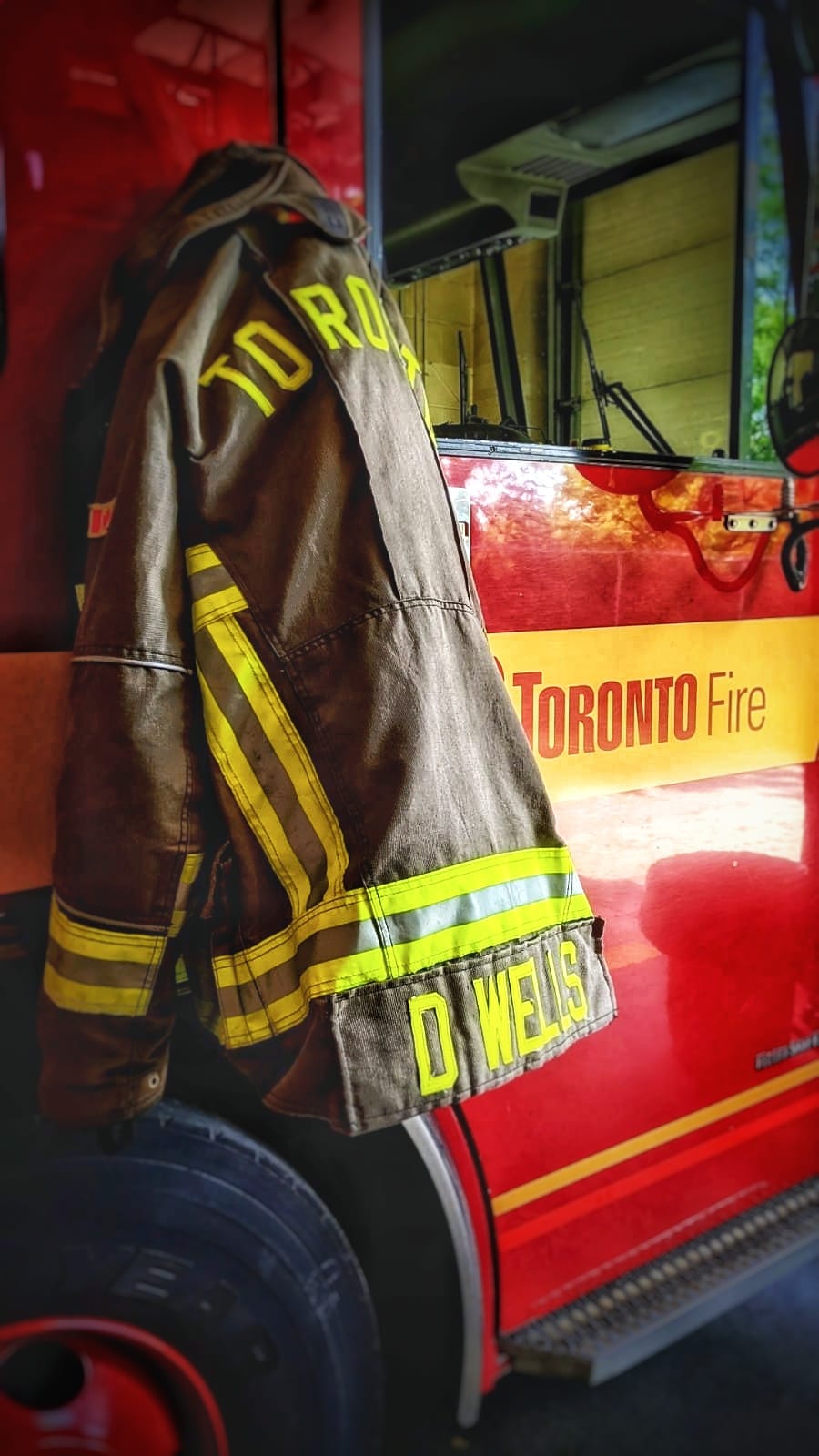
When the new NFPA 1970, Standard on Protective Ensembles for Structural and Proximity Firefighting, Work Apparel, Open-Circuit Self-Contained Breathing Apparatus (SCBA) for Emergency Services, and Personal Alert Safety Systems (PASS) became effective in late September 2024, it gave manufacturers 12 months to meet the standard’s requirements, including perhaps the most pressing and seemingly insurmountable one of producing products that did not contain the PFAS (per- and polyfluoroalkyl substances) “forever” chemicals.
Much has been written of PFAS chemicals, including about their use in firefighter personal protective equipment (PPE), and especially firefighter turnout gear (ensembles).
The first of these PFAS chemicals was released as Teflon® in 1938. They were labelled “forever chemicals” by the Washington Post in 2018, and the fire service used them for their qualities to resist heat, oils and water. Lessons about PFAS chemicals are everywhere, and none of them are encouraging in the context of effect on human health. The movie Dark Waters, released in 2019 and based on a true story about the effect of the release of a PFAS chemical on citizens near the community of Parkersburg, West Virginia presents the hard news in a quasi-documentary format.
Legislatures almost everywhere are passing laws prohibiting the use of PFAS chemicals to some extent or completely and both the International Association of Fire Chiefs (IAFC) and the International Association of Fire Fighters (IAFF) have been instrumental in fire service education and advocacy for PFAS safety measures. Rightfully so, given that in 2022 occupational exposure as a firefighter was classified as a Group 1 known human carcinogen by the International Agency for Research on Cancer (IARC). The IARC has four classification ‘Groups’:
Group 1 Carcinogenic to humans
Group 2A Probably carcinogenic to humans
Group 2B Possibly carcinogenic to humans
Group 3 Not classifiable as to its carcinogenicity to humans
The IARC Monograph (Volume 135) classifying firefighting as Group 1 details the research supporting that classification. The discussion of occupational exposure begins at Section 1.4.2 and quickly cites first responders, (including firefighters) as the second most frequently characterized worker population for [PFAS} exposure, next to PFAS production workers, The most notable firefighter exposures detailed were from Aqueous Film Forming Foam (AFFF), supporting previously existing research conclusions by Rotander et al from 2015.
The magnitude of change presented by the elimination of PFAS chemicals is a paradigm shift in firefighting. The manufacturers will tend to NFPA 1970 compliance in the production process, which, of course, is why insistence on such compliance is the first order of business in the purchasing process, but there are concerns both that the elimination of PFAS chemicals altogether in firefighting equipment is nearly an impossible effort, and that the effort will lead to performance characteristics sufficiently different enough to what we have become accustomed to potentially require significant changes across a broad range of heretofore common firefighting protocols and practices.
In 2024, the Metropolitan Fire Chiefs Association, a section of both the IAFC and NFPA, released a position statement through the Urban Fire Forum (UFF) that called for further research on PFAS in PPE, but which also offered In-Service Training Considerations to address potential changes that the fire service may need to make. The considerations represent an excellent, easily integrated, somewhat standardized means of assessing the performance characteristics of new non-PFAS based PPE as it is adopted.
There are seven consideration headings with between two and four related recommended practices in the position statement as follows:
- Pre-Deployment Testing
- Performance testing
- Durability and wear
- Pilot program
- PPE Suitability
- Assess protective gaps
- Risk compensation strategies
- Risk Assessment
- Re-evaluate hazards
- Rules of engagement
- Adjusted work limits
- Training and Competence
- Enhanced training
- Behavioural adaptation
- Modified Firefighter Rehabilitation
- Revised rehab protocols
- Cooling techniques
- Nutritional support
- Post-Exposure Gear Cleaning and Decontamination
- Decontamination of PPE
- On-site gross decontamination
- Routine deep cleaning
- Post-Deployment Review
- Early stage audit
- User feedback analysis
- Performance adjustments
Departmental adoption of the In-Service Training Considerations seems prudent and logistically simple. Broader common adoption across the Canadian fire service could provide a means for centralizing and collating results into meaningful feedback for quick action, if required; summary and dissemination of best practices, and; better development of future standards.
To the extent that the Considerations pertain to PPE, it seems that they could act as precedent for a reasonable facsimile that could be easily drafted to apply to firefighting equipment generally.
The IARC Monograph also addressed PFAS chemicals in fire stations, and contamination of nearby soil by the use of certain products, specifically AFFF, during training.
The road to PFAS elimination is clearly complex and long, but obviously worthwhile, especially given the role of PFAS chemicals in the IARC classifying our work as a known human carcinogen. That’s a classification that needs to be changed.
Learn about PFAS chemicals: PFAS – Wikipedia
The IARC listing of firefighting can be seen here: List of Classifications – IARC Monographs on the Identification of Carcinogenic Hazards to Humans
You can read the science supporting the Group 1 classification of firefighting here in IARC Monograph Volume 135: IARC Publications Website – Perfluorooctanoic Acid (PFOA) and Perfluorooctanesulfonic Acid (PFOS)